

How Do I Clean The Fur On A White Ram Mount
How to Make clean a Skull
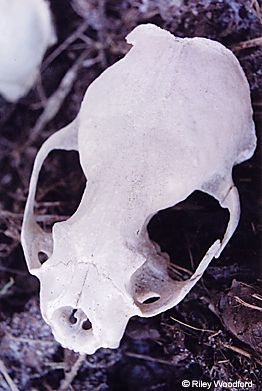 Every year thousands of people hunt and trap in Alaska. Ane of the pocket-sized treasures discarded past many of these outdoors people is the skull of the hunted or trapped animal. When clean, a skull is a source of curiosity and wonder - a mirror of an fauna's style of life. Insights into the fauna'south diet, strength of bite and its particularly developed senses, amid other things, can exist adamant from its skull. In addition to enjoying the natural wonder of skulls, a skull drove can be a great addition to a classroom in a variety of courses, including fine art, science and social studies.
Some taxidermists or folks interested in cleaning skulls keep colonies of beetles that will consume the tissue and exit the os, doing most of the work. This is an option if you can contact someone with beetles.
Cleaning a skull is an piece of cake procedure and can exist no more unpleasant than pulling meat off a cooked soup bone. Here are a few suggestions of how to clean a skull for display or report.
The initial pace in cleaning a skull is simmering the skull subsequently the hair and hide are removed. A temperature of about 160 degrees is good, well beneath boiling.
If the skull cannot be cleaned presently after the animal's death, freeze it. Rotting skulls are no fun to make clean and may crusade a revolt in the household. If the skull is malodorous from decay, it will be repugnant during humid. In this situation, eddy it on a camp stove exterior, or in the garage, in a castaway pot.
Immerse the skull in water and allow simmer. A thawed wolf or deport skull requires peradventure viii hours of simmering. Smaller skulls, such every bit marten, fox or lynx, take about xl to lx minutes. Skulls from sometime historic period animals often require longer. Frozen skulls will take about 15 to 30 minutes longer. The skull is ready to be cleaned when the muscle pulls off easily. Do not boil the skull or simmer longer than necessary; too long as this can scissure the teeth and soften the bone. Information technology is best to remove the meat and encephalon tissue while they are however quite warm. Once cooled and dry, thorough removal of tissue is more difficult.
The muscle, if cooked sufficiently, comes off in hunks. Utilise a small knife (a scalpel works great if you have one to gently scrape away stubborn tissue, but take care not to cutting or mar the os. Nerve and connective tissue tin can be teased out of holes and crevices with a wire or large tweezers. The tough part is cleaning within the attic (brain case). This is washed through the oval opening at the back of the skull, where the skull attaches to the spine. On a bear or wolf, a small spoon is handy for scooping out the encephalon. Running a stiff wire or pocket-size knife effectually within the skull, betwixt the brain tissue and bone, helps loosen it and sometimes it volition come out in big pieces. With smaller skulls, a big tweezers for teasing out brain tissue works too equally anything. Repeated rinsing flushes out loose tissue.
In that location are roll-like, fragile bones in the nasal cavities of mammals. If you lot desire to keep them in the skull, work gently with them. Flushing water through the brain cavity and nasal cavity will work out some of the residual tissue in these bones.
Subsequently the skull is equally clean as y'all can get it, soak information technology in an enzyme-bleach powder (such as Biz) using almost ¾ cup to a gallon of water. Don't use liquid bleach, it is harsher to the os and does not take the enzyme action that is needed to break down residue tissue. Leave big skulls (bear, wolf, caribou, bison) in this solution for iii days. Smaller skulls may require less than i ½ days. The skull has soaked long enough when the remaining tissue can be easily removed.
A small, potent-bristled brush, a modest knife (scalpel) and tweezers are adequate tools for doing the final clean up. Rinse the skull well after you accept removed the terminal, stubborn tissues.
Teeth will invariably loosen during heating and cleaning. Hang on to them and glue them back in identify with white gum once the skull is make clean and dry out. The skull should be completely dry if it is to be stored in a box or plastic pocketbook.
In the Alaskan interior the dry climate makes it trickier to preserve a cleaned skull. The teeth in particular become very brittle and cracked. Heating and soaking should exist washed at accented minimum times to reduce excessive cracking of os in dry climates.
Painting the teeth and skull with diluted, white glue helps too. If teeth get-go to crack, endeavour filling the cracks with super glue to reduce further fracturing.
If you make up one's mind you want a skull or two, there are a few things to remember before you lot begin the search for specimens.
- Check the regulations. Some species are protected by land and federal laws, and it is illegal to possess any parts of these animals. Examples are bald eagles, any birds protected by the migratory bird human activity, and marine mammals. Skulls of most animals taken during established hunting seasons within state and federal regulations are legal to possess.
- Make certain that, for species which require it, the skull has been sealed by a representative of ADF&G. Once the skull is cleaned, the seal can exist removed.
- Skulls, of some species, like some other creature parts, cannot exist sold, purchased or bartered. A hunter or trapper can give you a skull but, over again, cheque the sealing requirements for that species.
- Don't impale animals just for skulls. This could exist considered wanton waste, which is a misdemeanor.
- Handle carnivore skulls from the western and northern coasts of Alaska using gloves, preferably disposable ones. In that location have been several cases of rabies reported from these areas particularly in wolves and foxes. Once the skull has boiled for near thirty minutes the rabies virus will exist destroyed.
- When in doubt nigh possession or legality, call the Department of Fish and Game or Alaska Country Troopers, Bureau of Wildlife Enforcement.
Sources of Skulls (skulls will probably need to be cleaned)
- Hunters and Hunting Associations
- Taxidermists
- Trappers and Trappers' Associations
- U.S. Fish and Wildlife Service
For educational purposes: Alaska Department of Fish and Game
P.O. Box 25526
Juneau, AK 99802

Source: https://www.adfg.alaska.gov/index.cfm?adfg=hunting.skull
Posted by: lyonsoneve1970.blogspot.com
0 Response to "How Do I Clean The Fur On A White Ram Mount"
Post a Comment